Dynamic Programming: A Smart Way to Solve Complex Problems Efficiently

December 22, 2025
4 min read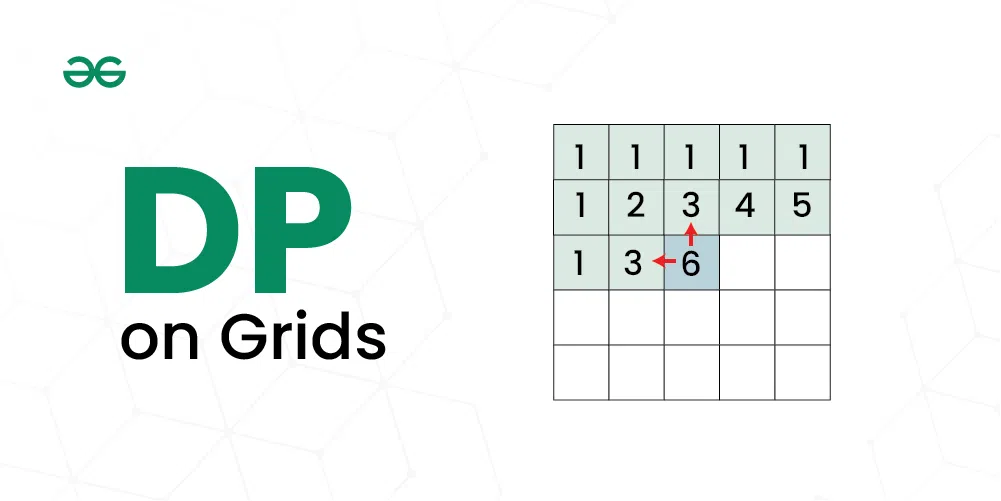
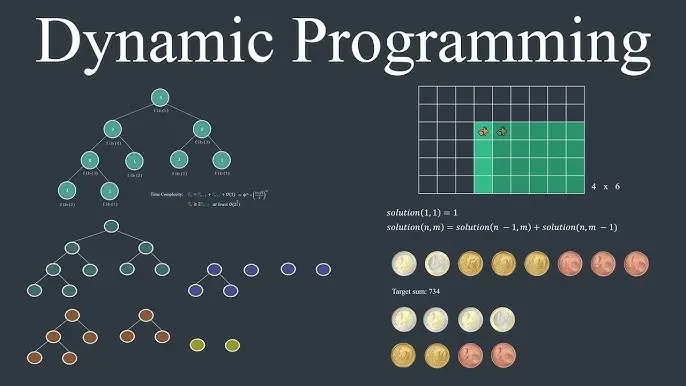
Dynamic Programming (DP) is one of the most powerful and frequently used problem-solving techniques in computer science. It plays a critical role in competitive programming, technical interviews, and real-world applications such as optimization, artificial intelligence, and software engineering. Despite its intimidating name, dynamic programming is based on a simple idea: solve problems by breaking them into smaller overlapping subproblems and storing their results.
What Is Dynamic Programming?
Dynamic Programming is an algorithmic technique used to solve problems that exhibit two key properties:
- Overlapping Subproblems – The same subproblems are solved multiple times.
- Optimal Substructure – The solution to a problem can be built from the solutions of its subproblems.
Instead of recalculating the same results repeatedly, DP stores them and reuses them, significantly improving efficiency.
Why Dynamic Programming Is Important
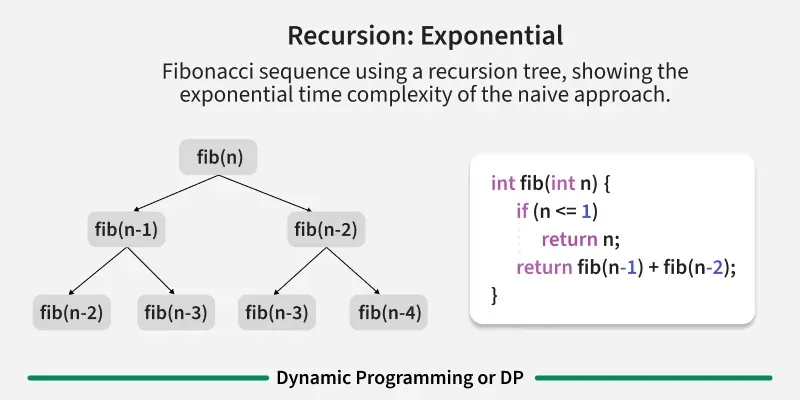
Many problems that seem impossible to solve efficiently using brute force become practical with dynamic programming. DP reduces exponential time complexity to polynomial time in many cases, making it essential for solving large input constraints.
Dynamic programming is widely used in:
- Competitive programming and coding interviews
- Pathfinding and graph algorithms
- Optimization problems
- Game theory
- Machine learning and AI
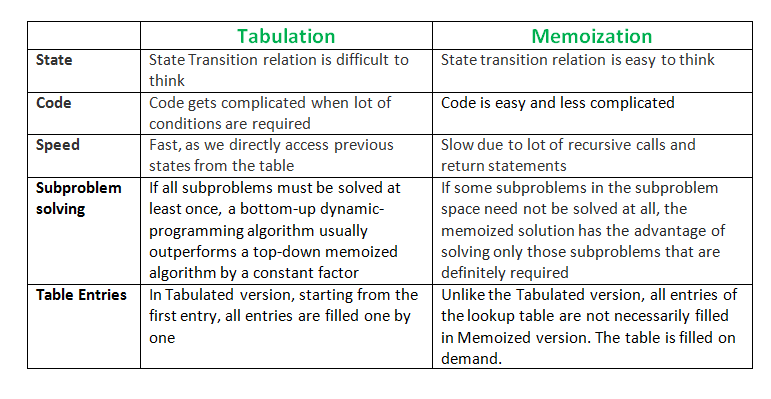
Two Approaches to Dynamic Programming
1. Top-Down Approach (Memoization)
In this approach, you start solving the problem recursively and store the result of each subproblem in a table (array or map). If the same subproblem appears again, the stored result is reused.
Key idea:
“Solve when needed, store the result.”
This method is intuitive and closely resembles recursion.
2. Bottom-Up Approach (Tabulation)
Here, you start from the smallest subproblems and iteratively build up the solution to the main problem using a table.
Key idea:
“Solve everything step by step from the base case.”
This approach avoids recursion overhead and is often more efficient in practice.
Common Dynamic Programming Problems
Dynamic programming appears in many classic problems, such as:
- Fibonacci numbers
- Knapsack problem
- Longest Common Subsequence (LCS)
- Longest Increasing Subsequence (LIS)
- Coin Change problem
- Matrix Chain Multiplication
Learning these problems helps build strong DP intuition.
How to Identify a Dynamic Programming Problem
A problem is a good candidate for DP if:
- It asks for an optimal value (maximum, minimum, or count).
- The solution can be divided into smaller similar problems.
- A brute-force solution would involve repeated calculations.
If you find yourself recalculating the same values again and again, dynamic programming is likely the right approach.
Steps to Solve a DP Problem
- Define the state – What does
dp[i]ordp[i][j]represent? - Identify the transition – How do you move from one state to another?
- Set base cases – Smallest problems with known answers.
- Choose an approach – Memoization or tabulation.
- Optimize (optional) – Reduce space if possible.
Following these steps brings structure and clarity to DP problems.
Time and Space Complexity
Dynamic programming often trades space for time. While it uses extra memory to store results, the performance gain is usually worth it. Many DP solutions run in O(n) or O(n²) time instead of exponential time.
With experience, you can also optimize space complexity by storing only the required previous states.
Common Mistakes in Dynamic Programming
- Incorrect state definition
- Missing or wrong base cases
- Overcomplicating transitions
- Using DP when a greedy solution exists
Avoiding these mistakes comes with practice and problem-solving experience.
Final Thoughts
Dynamic programming is not just a technique—it is a way of thinking. Once you understand how to break problems into subproblems and reuse results, many difficult questions become manageable. Although DP can feel challenging at first, consistent practice with classic problems builds strong intuition over time.
Mastering dynamic programming is a major milestone for any programmer aiming to excel in problem-solving, interviews, and real-world software development.
Comments
About Author
Vivek
Tech enthusiast writing blogs on emerging technologies, programming, software development, and the latest innovations worldwide.
No comments yet. Be the first to share your thoughts!